


Knowing the kind of seafood the locals usually eat in Ibiza is key to get it right at restaurants and try the local catch through traditional recipes or new modern dishes. If you like fish dishes, find out about the most delicious fish that populates our waters and relish the gastronomic pleasures produced by the island.
If you're visiting Ibiza, don’t miss the chance to try the local fish in typical Ibizan dishes. A good way to check that the fish you’re eating has been caught on the island’s coasts is by looking for the Peix Nostrum tag, which is a label created by the Fishing Guild of Eivissa and Sant Antoni to guarantee the freshness, sustainability and origin of the fish and also ensure that it has been caught by the local fleet using traditional methods and taken to the fish market in under four hours.
This tag is attached to large fish, especially the more expensive species, like grouper, dentex, scorpion fish or lobster. On the Peix Nostrum website, you can check which restaurants in Ibiza source their fish from the fishing guilds of the island and make sure you go to the right places.
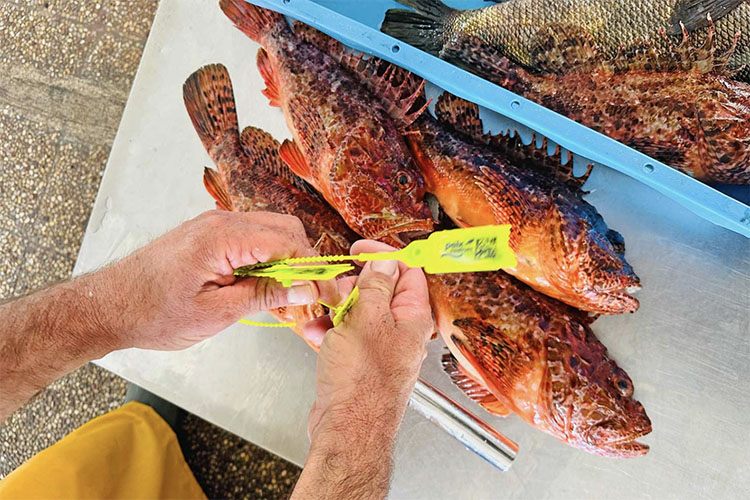 Look for the Peix Nostrum tag. Picture: Peix Nostrum
Fish in Ibiza: kinds of fish and places to eat them
Red scorpionfish or rotja (Scorpaena scrofa): Reddish fish with firm flesh, its deep, delicate flavour makes it a first choice for fish stews. Always present in the bullit de peix—which is a typical fish stew followed by a dish of arroz a banda (fish-based paella).
St. Peter’s fish or gall (Zeus faber): Known for the spot on its sides, its white flesh is perfect for the grill or the oven. Restaurants usually add it to the Day’s Specials board. The price per kilo varies depending on the market, so it’s best to know the price and weight before you order it. It’s also added to the bullit de peix.
Amberjack or sirvia (Seriola dumerili): Along with the red mullet, squid and bluefin tuna, the sirvia is one of the flagship fish in autumn, which doesn’t mean that you can’t get it in the summer. This blue fish has very few bones and its flesh is exquisite and greatly appreciated. It’s often grilled or baked, but nowadays you’ll also find it as carpaccio, shashimi or ceviche.
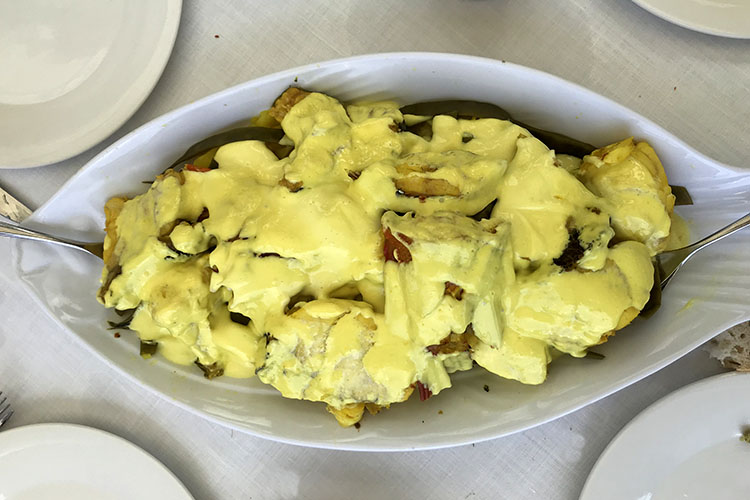 Bullit de peix. © Nuria Cortes
Grouper or anfós (Epinephelus marginatus): A true gem of Ibiza’s fishing and one of the most coveted species. Its white, compact and tasty flesh is perfect on the grill or in stews, like the bullit de peix, the guisat de peix or the salmorra de peix.
Dentex (Dentex dentex): The dentex is one of the most delicious fish caught in Ibiza’s sea. This white fish is delectable baked, which is how it’s usually cooked in restaurants with a side of potatoes. It’s fished all year round but it’s easier to get in spring and autumn.
Caramel or gerret (Spicara smaris): Similar to the sardine, the white flesh of the gerret is tender but has a strong flavour. This species usually lives in the Posidonia oceanica seagrass meadows and over a muddy or sandy seabed. It’s very popular in Ibiza’s winter dishes, pickled, fried or with rice and cauliflower.
Skate or ratjada: This cartilaginous fish with a delicate flavour is great for kids’ palates that are not used to strong tastes. It’s the star of a typical Ibizan fish stew called borrida de ratjada, but it’s also eaten fried.
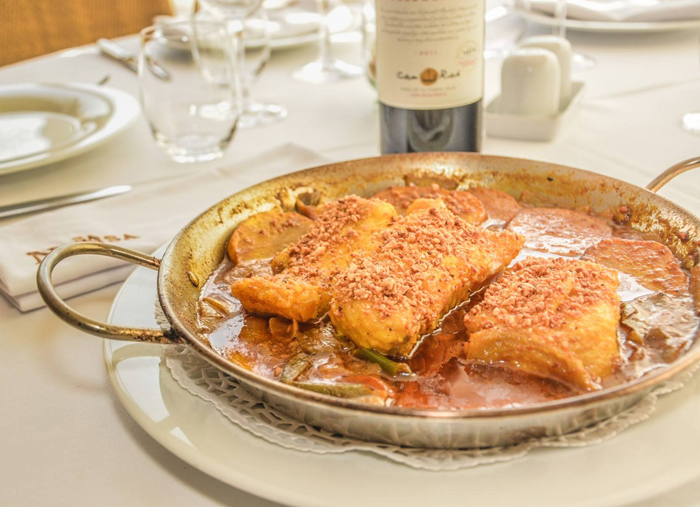 Borrida de ratjada. Picture: Restaurante Sa Nansa
Bluefin tuna or tonyina (Thunnus thynnus): This coveted fish swims across Ibiza’s waters every year as part of its migration from the Atlantic Ocean to the warm Med waters for its reproduction. Already caught in Phoenician and Roman times, its fishing is now regulated and certified by the fishing guilds of Eivissa and Sant Antoni. It’s usually served grilled or in Asian recipes, although the Ibizan recipe book uses it for Ibiza-style stews.
Pearly razorfish, commonly known as cleaver wrasse or raor (Xyrichtys novacula): This small fish with pinky scales, white flesh and delicate flavour is caught between September and March and has very limited fishing quotas, so it’s pretty hard to find in restaurants. It’s usually quite expensive and is served fried.
Other fish to try: Depending on the season and availability, the Day’s Fish may also include other regular fish or occasional species swimming past our coasts, like monkish, red snapper, turbot, guilt-head bream, john dory, red mullet and red seabream.
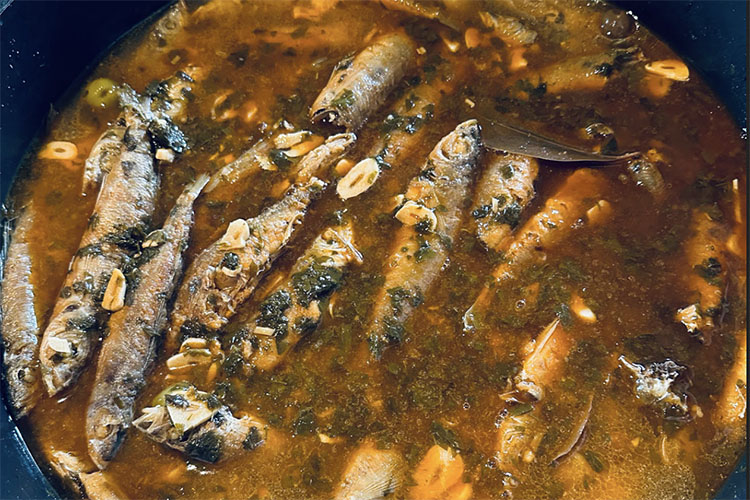 Pickled gerret. Picture: Peix Nostrum
Shellfish and other delicacies from Ibiza’s sea
Scarlet shrimp of Ibiza: Caught in deep sea between Ibiza and Denia, it’s known for its vibrant colour and delicate flavour. We usually eat it grilled as is to preserve the natural aroma of the sea.
Ibizan lobster: The llagosta vermella or crayfish or spiny lobster (Palinurus elephas) is one of the island’s culinary delicacies. Its fishing is heavily regulated to ensure its sustainability. It’s caught in the summer, so you’ll find it in restaurants supplied by the fishing guilds of Eivissa and Sant Antoni and will therefore have their tag. It’s usually served in a stew or in a rice dish, dry or creamy. In the last few years, people have been ordering it with fried eggs and chips.
Cuttlefish: This fish loves warm waters and lives in shallow waters and Posidonia seagrass meadows, where it can hide from its predators. This is why the waters of the Balearic Islands are the perfect habitat for it.
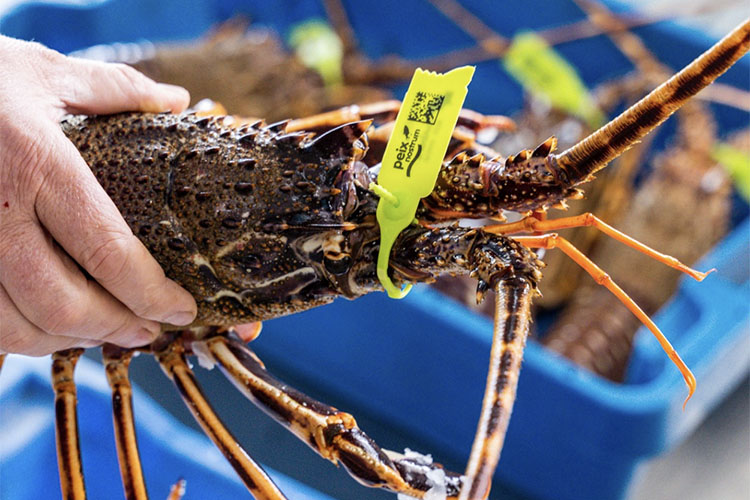 Ibizan lobster. Picture: Peix Nostrum.
Squid: It’s tender texture and delicious taste make it one of the top stars in autumn. Restaurants serve it grilled, stuffed with sobrasada or in the traditional Ibizan stew called frita de calamar.
Octopus: It's caught and eaten from October to February, mainly stewed as part of the traditional dish called frita de pulpo. Not so long ago, it was one of the typical tapas served every day at traditional bars on the island. Today, you can find it at traditional Ibizan restaurants like Es Rebost de Can Prats or Ca’n Alfredo.
Royal sea cucumber or espardenya (Parastichopus regalis): A true delicacy with its fleshy texture and taste of the sea, it isn’t easily found outside the Balearic Islands. This echinoderm (like the starfish) is eaten grilled, sautéed or in rice dishes. If you spot it on the menu, go for it!
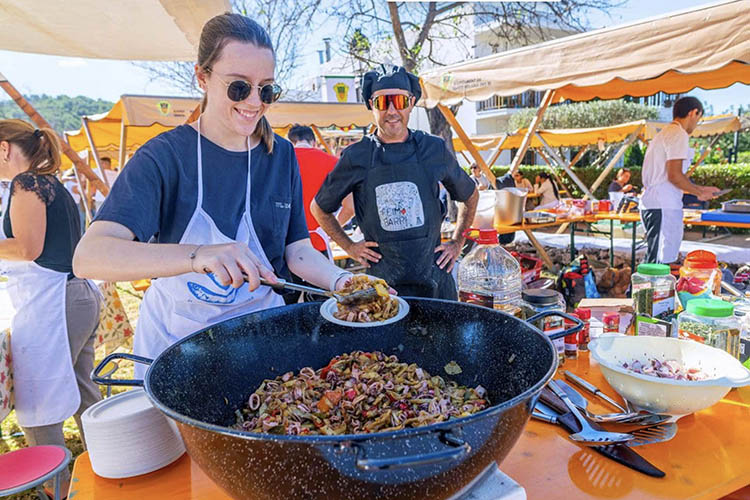 Fira de Calamar, Sant Carles. Picture: Ibiza Travel
Food festivals with the taste of Ibiza
From autumn to spring, the island’s calendar is filled with mouth-watering food events honouring typical, iconic products of the Ibizan cuisine. If your trip coincides with one of the following seafood events, don’t miss it and join the popular feast!
- Fira de sa Llagosta i Peix d’Eivissa, in March. Sant Antoni de Portmany
- Festival Gastronòmic de sa Sepia, in March. Sant Joan de Labritja.
- Fira des Gerret d’Eivissa, first Saturday in March. Santa Eulària des Riu.
- Concurso de frita de polp, in March. Sant Josep de sa Talaia.
- Fira des moll i peixos de tardor, first Saturday in October. Eivissa.
- Fira Gastronómica del Calamar, last Saturday in October. Sant Carles.
- Fira des polp i la patata vermella d’Eivissa, in November. Sant Miquel.
The perfect hotel for a scrumptious holiday
Our modern, peaceful 4-star hotel is perfect to enjoy all the charms of the quieter, family-friendly Ibiza, including its food, as there are so many traditional restaurants and beach bars in the area of Es Canar besides our very own ceviche restaurant. Book your hotel in Ibiza at the best rate by booking directly from our website and get extra benefits.
See you soon!
Main picture: Grilled grouper. © Nuria Cortes


